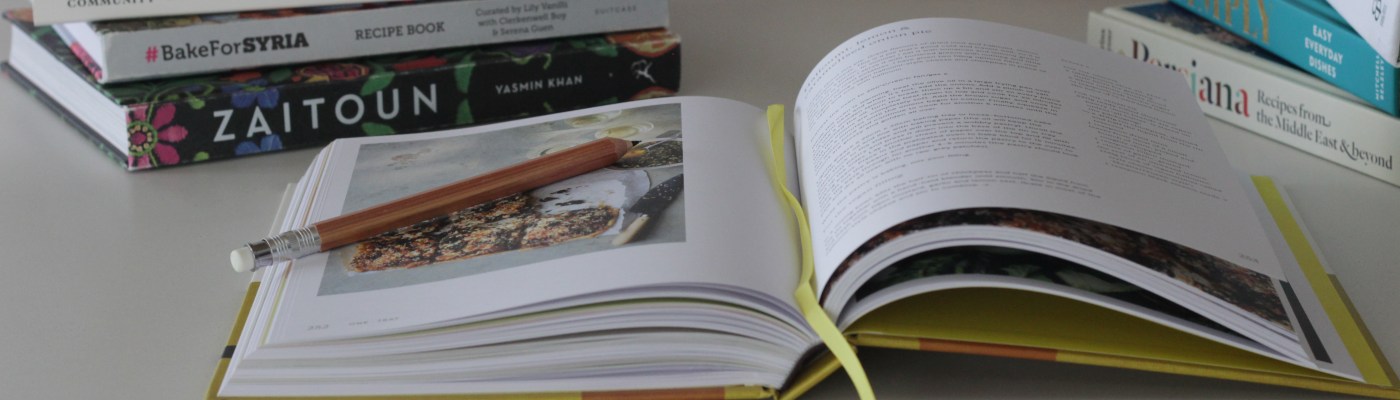
As you will likely have realised if you’re reading me regularly, this blog is a space for me to talk about all things food and cooking. This, of course, translates to writing about and reviewing cookbooks. I wouldn’t call myself ‘obsessed’ with cookbooks; I know many people with collections bordering the thousands, and my grand total comes in at a paltry 66—I haven’t even cracked triple digits. My personal cookbook library is a very careful curation of works that together represent who I am in the kitchen, as well as who I aspire to be.
This is in the interests of my apparent hunt for minimalism (which I’m clearly yet to achieve), as well as respecting the limits of my kitchen shelf space and, of course, the limits of my funds. I’ve already explained that I assess individual recipes based on their Dish Rating; for whole cookbooks I meticulously calculate a Cookability Factor. The Cookability Factor specifically influences whether or not I buy a book for my home collection.
Quite simply, the Cookability Factor is the proportion of recipes in the book that I would actually cook.
Once I have literally counted every single recipe in the book as well as every single recipe that I would actually, realistically cook, I convert this to a percentage. If the percentage of recipes I would cook is 50 per cent or higher, I buy the book.
If you look at your own cookbooks and assess them accordingly, you’ll find that this is a surprisingly difficult benchmark. Note that it is very different from thinking about which recipes look or sound delicious. It is also quite different to judging the number of recipes that I would love to eat. Even more nuanced is the difference between the Cookability Factor and the number of recipes that I want to be able cook.
No, the Cookability Factor is none of these things. It is much more practical. It is also, obviously, highly subjective. It’s affected by quirks of:
- ingredient accessibility for me here in Australia (I don’t know when I’ve ever seen a celeriac, so I’m sorry Ottolenghi but I won’t be roasting it whole)
- taste preferences like my obsession with roasting vegetables until crisp and caramelised (if you ask me to steam my veg, I’m either going to ignore your directions or reject your recipe entirely)
- my own skill limitations (I have never cooked a whole crab or lobster and I don’t see myself suddenly starting now)
- and my existing cookbook and recipe collection (yes, this version of falafel sounds incredible but I already have four recipes in each of my other Palestinian cookbooks and I’ve not yet made any of them either).
The Cookability Factor also changes with the seasons of my life, as well as my growth as a cook. Five years ago I wouldn’t have looked twice at a recipe featuring beetroot, now I actively seek them out. I used to believe that a soup need vegetables, carbohydrates and a protein in order to be a complete meal, and I’ve readily abandoned this in favour of more meat-free, sustainable eating. Sometimes I happily stumble upon an older cookbook I had previously rejected, only to find that it aligns much more closely with my current cookability.
The cookbook I own with the highest Cookability Factor is, in fact, also my favourite one. (So clearly my system works.) Yasmin Khan’s Palestinian cookbook, Zaitoun, ranks a hefty 65.6%. Yes, that is a hefty number. Remember how I said it was a surprisingly difficult benchmark? Any book I own that reaches the sixties is doing remarkably well. Most of my others barely scrape through at all.
There are, of course, exceptions to the Cookability Factor. Times when a book has a particular appeal to a special place in my heart that means I can’t help but feel the need to own it. These are sentimental pieces. Books in this category tend to be travel souvenirs—such as The Great New Zealand Cookbook, purchased on my honeymoon—or otherwise representative of a place that I draw comfort from—like Flavours of Queensland, an ode to my home state’s gorgeous local produce and signature restaurants, or Greg and Lucy Malouf’s Turquoise, a stunning photographic work I often flip through to take me back to Turkey, one of my favourite places in the world. Yet other books in the sentimental collection are those specific to a particular type of cooking or cuisine—a type of cooking or cuisine that I especially adore. These are mostly carbohydrates. I have several books on breadmaking, one on cheese (and milk and yoghurt) written by a dairy farmer, and books on pasta, potato, pizza and risotto. Oh and soup. Two on soup!
Also falling into the realm of books for which the Cookability Factor is inapplicable are my foundational basics. Samin Nosrat’s Salt Fat Acid Heat is of course among them, along with The Flavour Thesaurus which appeals to the chef and the linguist in me; Australian Women’s Weekly’s Recipes and Secrets from Our Test Kitchen which is essential for anyone who grew up in Australia in the 90s (Women’s Weekly triple-tested cookbooks are still my holy grail for many cooking categories); and The Food Lab from trailblazing J. Kenji López-Alt as he brings science and cooking together to deal with my internal 4-year-old perpetually asking ‘But why?’ in the kitchen. Most of these books I don’t even use for the recipes, but for the cookery insights and advice.
Other exceptions represent a particular time in my life, like Your Place or Mine? by inimitable MasterChef Australia judges Gary Mehigan and George Calombaris, published during the second season when the whole country started to become obsessed. There’s also The Vintage Tea Party Book and High Tea at the Victoria Room, purchased when we were experiencing peak High Tea culture, circa 2010. These books make me nostalgic.
And finally, there are the gifts. Mostly purchased for me from my beautiful mother who raised me on her own exceptional cooking, but also includes the standout The Food of Vietnam by Luke Nguyen, my now-husband’s first birthday present for me. My kitchen shelves also boast a few gifts I purchased for my husband—an entire Nutella cookbook falls in here, along with A House Husband’s Guide: Cooking for your Pregnant Partner, optimistically bought prior to my pregnancy and never touched again.
All of this is to say that the Cookability Factor actually carries very little weight when it comes to me and buying books. If I’m having to apply the percentage rule, usually it means I don’t need the book. On the contrary, if I keep coming back to a book and trying to find more recipes to convince myself it fits, it I’m generally already sold on the book based on one of the exemptions and I’ll buy it anyway. But having the Cookability Factor certainly helps me feel like I’m exercising a little more caution and control with my cookbook acquisitions.
While I don’t buy every single cookbook I’d like to, I do rely heavily on my local public library to incessantly borrow any and every other cookbook I can get my hands on. Many of these borrowed tomes have yielded some of my favourite recipes that I turn to time and time again. Annabel Crabb and Wendy Sharpe’s savoury bread and butter pudding from Special Delivery is classic fare for inviting friends over for breakfast. I bake Yotam Ottolenghi’s cauliflower cake from Plenty More and cheesy jalapeño cornbread from Simple at least every couple of months. I once stumbled upon the recipe for walnut and parsley pasta sauce in an old ‘encyclopaedia of Italian cooking’ that has become a regular weeknight fallback, tossed through spaghetti.
My love for and consumption of cookbooks certainly does not start with the Cookability Factor. Nor does it end with it. My heart is always open to new cookbooks, borrowed or bought; through my reviews I hope to share some of this cookbookery affection with you, and help you cultivate your own Cookability Factor for curating your kitchen’s library.
 The Foodiarist
[…] and devour it slowly, and yet also immediately cook everything in it. This book has an astounding Shahedah’s Cookability Factor of 63.5%—my second highest to date (TL;DR: anything over 60% is rare). Every single recipe is so […]
LikeLike
[…] recipes to try over the coming weeks, and I’m already salivating. The book comes in at a Cookability Factor score of 53%, depending on what day I’m doing the counting. But this is a strong 53%. Yes, I […]
LikeLike
[…] cooking, but with the trademark Ottolenghi flavour profiles. And yet… it still didn’t meet my Cookability Factor threshold. At the end of the day, my overwhelming impression of Ottolenghi recipes is that they are mostly […]
LikeLike
[…] all of these delectable recipes, in tracking my standard Cookability Factor for XGT I came up with a surprisingly paltry 22 per cent. Out of all the zing and zip and crunch […]
LikeLike