Another season of MasterChef Australia has come and gone. Now that a couple of weeks have passed and I’ve had time to sit with the gaping hole left in its place, I’ve come to recognise that emptiness is not all I’m feeling…
Relief.
I’m feeling relief.
Sure, MasterChef is not the all-consuming daily endeavour it once was, with 6 episodes a week plus masterclasses. But it still is not a commitment to be scoffed at—just ask anyone whose toddler goes to bed right when each episode airs, and who then has to wait to watch each episode later on catch-up TV (or is this just me?). I tried to keep on top of it this year, undertaking to watch every episode and avoid every spoiler. I did fine until I casually mentioned it at family dinner one evening, to be told that the finale was mere days away and I had two weeks’ worth of episodes to catch up on.
The next few days were a scramble to watch in every waking minute; in the evenings of the semi-final and two-episode finale, I was desperately hanging out for the moment the episodes were uploaded online so I could catch up and… well, just go to bed.
So here I am. Relieved to have my evenings back. Relieved to be able to go to bed as soon as I want, no longer beholden to TenPlay’s schedule. Relieved not to have to watch the same commercials repeatedly.
Also relieved to have space to breathe and focus on my own cooking. Relieved to no longer feel just a little bit envious and inadequate every time I watch these ‘home cooks’ churn out complex, flavour-layered consommés and Michelin-starred desserts at every turn, as the judges bang their spoons on the edge of the tasting table and exclaim that it’s the ‘best dish they’ve eaten in this kitchen. Ever.’ every single week.
Though I’ve been cooking for years, MasterChef constantly reminds me how early on I am in my cooking journey—how much more I have to learn. Some of the items on my Cooking Knowledge Gaps list have been there for a while as I work my way up to them. Some keep getting bumped for more exciting ingredients, techniques or trends. Or some I just can’t be bothered with and I’m not sure I will ever want to. Regardless, I keep this list in the recesses of my mind, occasionally extracting it and examining it at leisure like a pristine business card filed under ‘Z’ in my mental rolodex. Whenever MasterChef is on though, the business card sits on the coffee table every night, glaring at me in its immaculateness.
This year, a few extra items were added to the list, and I’ve ruminated on them to varying degrees since April. This has been both disheartening and exhilarating all at once—imagine how dull it would be if there was never anything new you could do with food!
Today, I share some of the bigger items on my list with you knowing that you will likely recognise elements of yourself here. Unless you’ve studied in an elite culinary school or trained under a three hat chef (and if that is you, please comment below so I know you’re reading my blog), there’s usually something missing from your kitchen arsenal. Let us find solidarity in each other, knowing that—whether it’s pasta-making, perfecting pastry, or parfait—there is yet much learning, experimentation, and unforeseen joy to be found in our kitchens.
Cooking without recipes
Starting with the oldest, boldest item on the list: the ability to (successfully) cook or, more specifically, bake without a recipe.
It still boggles my mind every time a MasterChef contestant pulls a fluffy sponge cake out of the oven or overturns a tarte tatin with rough puff made from scratch. I can taste-as-you-go with the best of them for pretty much any sort of cooking, but the science of baking is such that I’m usually pretty rigid in recipe-following. In general, I’m a big fan of The Recipe. I like to think this skill would serve me well in a MasterChef Pressure Test. But beyond that, left to a Mystery Box and my own devices, I certainly won’t be voluntarily doing any sort of baked good, that’s for sure.
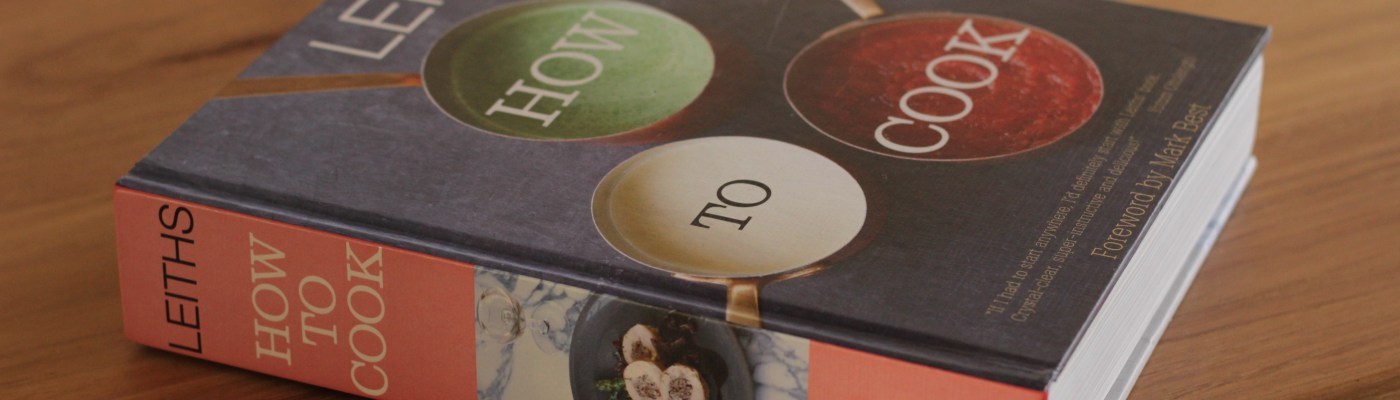
At the end of last year, after acquiring several new cookbooks in quick succession, I made a commitment to myself to use my existing collection of books more in 2021. I’m frequently borrowing other cookbooks from the local public library, and my Pinterest collection of food boards is completely out of control with nearly 5,000 recipes pinned by category, but the recipes on my shelves were feeling a bit neglected. So I took out an Eat Your Books membership (through which you can catalogue your recipe books which are indexed by recipe and ingredient, all of which are then fully searchable) and I didn’t look back. Suddenly it became a breeze to get the most out of my cookbooks, and I was joyously trying a new recipe from a book at least once a week.
And then the new season of MasterChef Australia started.
Year after year, these Australian home cooks emerge who keep recipes in their brain like a pre-millennial child recalls phone numbers, and I marvel at it now just as much as I ever have. Where do these people come from? None of them ever seem to struggle with it either, almost as though there’s an unpublished list of MasterChef entry requirements that includes ‘photographic memory for recipes’ alongside ‘eagerness to use a hibachi’ and ‘seasoned ice-cream maker’ (I’ll get to this last one in a moment).
I’m not completely clueless. I appreciate that baking is not just science. As with sourdough, it’s a careful blend of science and art, with a skilled baker delicately dancing between the two disciplines as a butterfly would between flowers. So I appreciate that you don’t actually need to memorise multiple recipes, just one recipe, and a solid understanding of it to know how to adapt it.
And yet here I am, referring to a faded, ragged-edged post-it with bullet points from Mum to double check how to cook basmati rice. And even then, I can never remember how much cooked rice the ‘recipe’ yields and what quantity will feed my family.
I’ve tried to overcome this, honestly I have. I’ve read Samin Nosrat’s Salt, Fat, Acid, Heat, and paid particular attention to pages like the one full of Venn diagrams demonstrating which variables—of yeast, fat, water, and kneading/mixing—give the particular results you want from a dough or batter, whether it’s chewy and rich (like brioche), tender (like an American chocolate chip cookie), crumbly (like shortbread), chewy (like sourdough), or something else (flaky, structured, etc). I borrowed the tome Ruhlman’s Twenty and his prior work Ratio from the library, and pored over the joyless, colourless (ok, not completely colourless) words, trying to absorb the ideas, the concepts, and the ratios, of course.
But reading and osmosis are no substitute teacher for experience.
I can watch Elise or Laura make pasta countless times, but until I’ve made pasta countless times, it won’t become muscle memory.
I won’t be able to dispose of my rice reference post-it until I’ve cooked rice a lot and often.
In a nutshell, I just need to cook a lot more. Maybe my challenge for 2022 should be to use my cookbooks less. Maybe it’s time to suspend my Eat Your Books membership already.
Whole cuts and animal proteins
This is not something that comes up too often on MasterChef, as the contestants are rarely charged with cooking a whole animal. They usually tend towards individual cuts that can be plated up individually and beautifully, though they do occasionally whip out a marvellous whole pan-fried snapper, a carefully trimmed quail, or succulent lamb shanks.
I’m certainly not going to be working with quail anytime soon (the ROI is much too low for me), but whole fish, lamb shanks, and many others are pretty high on my list of things I’d like to cook more.
I’ve fallen into a comfortable rut of cooking predominantly chicken breast or thigh (skinless, boneless), lamb mince, and salmon fillets. Occasionally I’ll branch out and buy some fresh white fish fillets if they’re there at the supermarket at the same time as me. Beef mince also makes an appearance when I’m not in the mood for lamb (which is infrequent, because I’m Aussie and I love lamb). And there was that one memorable random weekday on which we were gifted some giant king prawns that I turned into a delectable saffron prawn risotto.
But for the most part, I’m apprehensive about buying beautiful cuts of meat or seafood when I’m not sure I know how to work with them. I worry it would be such a waste.
Such fear clearly doesn’t play into MasterChef, where only recently have the judges started to prompt contestants to think about nose-to-tail and reconsider the ethics (and effort) of butchering 50 ducks for a service challenge to only use the legs. The leftover duck breasts and the like may not go to waste on MasterChef, but most people (myself included) don’t have an ‘open pantry’ full of different fish, several cuts of beef and lamb, and every different type of game or poultry imaginable at their disposal.
So, I stick with what I know.
The cause is not helped by the fact that I proactively cook vegetarian more often, in an effort to eat more sustainably for myself and for the planet. I also love that vegetables don’t really need forethought or salting hours beforehand (unless you’re working with eggplant), intense preparation (unless you’re dealing with globe artichokes), and don’t take hours to cook (except maybe for large beetroots or whole celeriac). I’ve gotten more and more familiar with obscure vegetables and seem to have moved further away from cooking with meat.
I’ve roasted a while chicken twice. The same holds for a whole fish and, on both occasions, they were part of my husband’s fishing trip haul—and fish that fresh needs little more than some slashes through the skin and a rub of olive oil, lemon and chilli.
I attempted a butterflied leg of lamb once and was so unimpressed with the results of my cobbled-together recipe that I haven’t been game to try again—let alone to think of trying lamb shanks or even lamb rack.
Though I could happily devour several Moreton Bay Bugs, lobster and crab, I’ve never brought any into my own kitchen raw.
This is not to say that any of these things are necessarily difficult to cook, but they are difficult to do well. And when you like cooking good food and loathe eating mediocre food, well, I suppose I’m waiting for the day when I know I can do them justice.
Ice cream
Even if you’ve only ever watched one episode of MasterChef Australia in 13 years, chances are you’ve watched multiple people make ice cream on your TV screen.
A few years back, Season 2 winner Adam Liaw memorably tweeted:
Soon someone’s just going to tip the entire contents of a Mystery Box directly into an ice cream machine and call it a day. #MasterChefAU
@adamliaw on Twitter 7:50PM 9 July 2017
That year was a particularly bad (or good?) year for ice cream. It was the season of Ben Ungermann, of Ungermann Brothers ice cream founded after his departure from the show. That season we saw cucumber, lemongrass and pickled grapes make their way into the ice cream churner, along with wasabi, smoked rice and even cep (mushroom) powder. And of course there was the blue cheese and goat cheese, which, incidentally, also appeared in mousse, semifreddo and parfait form that year. It was basically the retelling of Bertie Bott’s Every Flavour Bean as ice cream.
My point is: if you can find an ingredient in the MasterChef panty or garden, someone can make an ice cream out of it.
But that someone will sadly not be me.
Which is, in fact, sad, because I adore the atypical ice cream flavours. You already know that I prefer savoury to sweet, so much so that when it comes to dessert I’m notorious amongst my family and friends for choosing the ‘weird flavours’—the flavours that, apparently, don’t belong in dessert. This really just means that I pretty studiously avoid plain chocolate, vanilla, caramel, or anything else that seems too pedestrian. In my own kitchen I tend towards florals, herbs, and spices for desserts… incorporating turmeric, saffron or coriander seed to offset the sweetness of a syrup-soaked cake; swirling nutty, bitter tahini or crumbling halva through chocolate for indulgent brownies or addictive cookies; pairing lemon with basil or lavender for a refreshingly surprising shortbread or iced drink. I’m practically incapable of making cookies without finishing them with a sprinkle of salt flakes. I go through rosewater and orange blossom like they’re on tap. Essentially, I’m a dessert flavour snob.
So when I see MasterChef contestants turning out ice creams starring black olive, vinegar, curry, or horseradish, I’m not crinkling my nose in confusion and disgust—I get really excited. Finally an ice cream I can get on board with! And yet…
And yet, I have never made ice cream.
There. I said it.
I don’t even own an ice cream maker, or even an ice-cream making attachment for my illustrious, much-loved Kenwood stand mixer. My husband did buy me one once, but I told him I wouldn’t use it and had him return it. For a long time, I thought all this was because I didn’t know how to make ice cream and couldn’t be bothered to learn. A simple cooking knowledge gap like the rest on this list. But, upon review, I realise that after watching MasterChef religiously and having therefore observed contestants making ice cream approximately 5,428 times, I do now have a pretty clear notion of the basic steps. You start with an anglaise, in which I believe there’s cream and there’s definitely egg, because anglaise is a sort of custard, yes? This first step is where you add your flavour—and you want it to be intense, because it will mellow as the ice cream churns. You need to heat your ingredients to make the anglaise too, and, as many-a-contestant has learned, if you don’t let it cool sufficiently before pouring into the ice cream machine, it will not freeze and churn within a 75-minute cook. But if you do manage to chill your anglaise, once it’s in the machine you too can chill while the machine does its thing.
(Well, that’s what I’ve gathered I would do after pouring my anglaise into the churner, but of course on the show the contestants then usually proceed to run around completing the other 17 elements of their dish.)
Ice-cream-maker aside, the interwebs abound with recipes for no-churn ice-cream-machine-free recipes, meaning that not having a machine isn’t even an excuse.
So, apparently, I could make ice cream if I tried. Yet it remains a knowledge gap for me.
It’s funny how individual food preferences are formed. My love for cooking and spending time the kitchen is largely motivated by my love of eating. So I will happily spend a few hours making individual garlic and haloumi bread knots, and over the past couple of months I’ve spent literally whole days recipe testing spanakopita—complete with homemade phyllo pastry—simply because I know that I want to eat a whole batch of garlic bread knots or a whole tray full of spanakopita.
It seems that I don’t often want to eat ice cream often enough that I’m motivated to make it.
Spice
I started this post with the oldest item on my list, and I’m ending with my most recent—and devastating—discovery: that I don’t have a very workable understanding of many spices.
I came to this realisation as I watched this year’s MasterChef favourites Kishwar, Minoli and Depinder cook their way through biryanis, pilaus, kitcharis, and curries of crab, jackfruit, goat, cod and more, receiving high praise from the judges time and time again for their ability to create complex, rich, layered flavour. It was inspiring to watch these fellow brown women demonstrate their remarkable cooking skills and nuanced palates so far as to create dishes like green curry mini bundt cakes or betel leaf ice cream.
Inspiring and humbling.
Though I grew up watching my excellent cook of a mother, somehow I never picked up her ability to perfectly spice dishes. Like any Indian home cook, my mother has a silver spice dhaba (container) in her kitchen, which houses small portions of the most frequently used spices: chilli, cumin, coriander, garam masala, turmeric and paprika. These are topped up as needed from bulk-buy bags which are stored in the fridge the rest of the time to protect the spices from heat and light, the enemies of flavour and potency. Of course, she cooks with many other dried and whole spices and herbs, but those are kept separately. The 6 in the dhaba are the daily essentials, the foundational spices.
For a long time when I was young I thought I too would have such a spice dhaba in my kitchen. But as I got older and started cooking more and more, I found that I those 6 spices were not my most frequently used ones. It was many years before I could even tell the different between ground cumin and ground coriander without checking the labels hidden on the side. If I were to fill a dhaba today it would probably have something like: pul biber, sumac, allspice, nutmeg, and maybe sesame seeds and fennel seeds. But in practice, I don’t have any most-used spices or single out any favourites—and I don’t have a dhaba with only 6 spices, I have a custom-made timber and steel spice rack which displays a full 48 spice tins.
Despite this, spices are not my primary means of creating flavour.
I use fresh herbs a lot, along with alliums (garlic and leek being my favourite), as well as pastes and liquids such as tahini, tomato paste, miso, and pomegranate molasses, and of course there’s always butter, olive oil and cheese.
I thought this was just my particular style of cooking, but in watching MasterChef this year I realised that I have never created a curry from scratch, nor do I currently have the ability to.
Even though I can now tell the difference between cumin and coriander (if not by sight then definitely by taste or smell), the quantity and proportion of spices to use to create flavour is a skill that eludes me. As a child, watching my mum cook it always seemed like some combination of those 6 dhaba spices were thrown in, but how did she know which ones to use more of and which to use less of? In my mind, those spices seemed to blend into one general masala flavour palate that has never really untangled itself, largely due to the fact that I haven’t actively explored using the individual elements on their own.
This was honestly quite a surprising epiphany for me, and not a welcome one. It was this revelation that prompted me to write this post, in fact, as a sort of acknowledgement and reminder that we do all have cooking knowledge gaps, but the difference comes from what we intend to do about them. It may be fine for me to know that I don’t know how to make ice cream if I don’t really want to, but working with the ‘foundational spices’ is, in fact, foundational to cooking.
I think I’m probably due to spend a little more time in my mother’s kitchen, paying a little more attention to her spice dhaba.
 The Foodiarist
Good read, didn’t know you still a big fan of Masterchef
LikeLiked by 1 person