Husband: “Hey baby, mum has invited us all over for dinner tonight. She said around 5.30. That cool?”
Me: “Ummm, it’s 1pm on a weekday.”
Husband: “Yeah and?”
Me: “So it’s a bit late for this! There’s meat defrosting at home and all the ingredients are going to go off if I have to leave them for another day. Besides, you KNOW I was planning to go to the gym after work today so by the time I can be at your parents’ place looking presentable it’ll be at least 7pm.”
Husband: “Oh. Ok.”
Me: ” – “
Husband: “I’ll… tell her no then?”
Me: “Great, thank you.”
A typical conversation between my husband and me, circa First Year of Marriage.
Who am I kidding, it was at least the first three years of our marriage.
We’re only just coming up to our fifth anniversary now, but already times have changed.
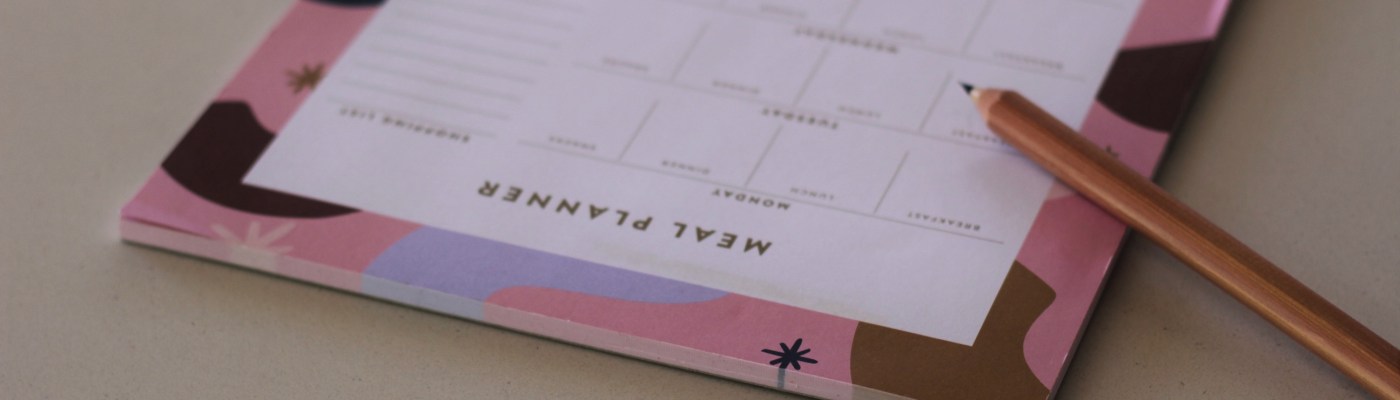
For those who know me well, you know that I am a capital-p Planner. My husband, on the other hand, can barely remember to set an alarm for the mornings. When the #MealPrepMonday trend took off, I was way ahead. I grew up learning to batch process onions and purée tomatoes, which were then frozen flat in baggies to snap off chunks easily for cooking later. It was not my mother’s freezer unless there were tiny Tupperware tubs containing single serves of cooked chicken breast pieces, ready for quick defrosting to whip up a sandwich or burrito at a moment’s notice. Soup and dhal were cooked in giant pots so at least half the leftovers could be saved for a rainy day. I didn’t know there was another way to store food besides in a clear, airtight container labelled with the description, quantity and date. From a young age I knew to find our weekly grocery list and menu plan beside the telephone (you know, the one permanently attached to the wall), so I could check what we’d be eating for dinner. I thought this was all normal. It certainly wasn’t something that required an Instagram photo with a hashtag.
Then I got married.
And chaos ensued.
No no, I’m exaggerating. But only slightly. My husband has a wide social circle, and most of his friends plan ahead about as much as he does. The conversation above played out in many and various scenarios, with my husband and I getting increasingly confused and frustrated with the other’s perspective. I am not going to sit here and pretend that I enjoy my husband’s spontaneity any more now than I did then. Nor am I going to go back and forth explaining why the Girl Scouts approach is obviously key to living your best life. And finally, I am not going to sit here and give you menu planning and meal prep tips. You can follow the hashtag on Insta for that.
What I am going to do, is actually the opposite. I’m going to explain the ways in which I’ve adapted my life and cooking to be more flexible and (*shudder*) spontaneous. And how you can do the same. This is a special post for you other Type A personalities out there who, like me, sometimes find that your, er, attention to detail and forethought is not always appreciated by your significant other, or those around you.
This is a work in progress. I still have a menu plan. I still do a routine grocery shop once a week. I still meal prep and batch cook. I do all of those things, but I now incorporate other, complementary approaches to my cooking to help keep my anxiety in check when last minute plans materialise.
My musings below are valuable, not just for allowing flexibility in cooking, but for reducing waste. One of the many Islamic values my parents instilled very strongly within me is an abhorrence for waste—any type of waste, but particularly food waste. So naturally, one of my biggest issues with a change in plans tends to be ‘but what will we do with The Food?!’. I hope these tips help you figure out exactly what to do with The Food.
Don’t rely on leftovers for lunch
Growing up, nothing would make my heart sink faster than peering at the Menu Planner and seeing ‘leftovers’ written in the little square for the day’s dinner. As sheltered and privileged as I was to receive a fresh, hot, home-cooked meal more often than not, I thought leftovers were the dullest of dinner fare.
Luckily, my mother didn’t let my ungrateful attitude deter her from serving leftovers and reinforcing the no-wasted-food message. Even the smallest of portions were saved. I have strong memories of racing into the kitchen on Thursday evenings (usually leftover night) to survey the countertop full of Mum’s smallest glass Pyrex and Corningware—round, square and oval alike—each containing unique bounty. The first to arrive to dinner could snag the best of the lot, bundling their chosen 3 to 4 dishes into the microwave with smug eyes. The subsequent attendees to trickle into the kitchen had to choose from whatever remained.
But before the food could even make it to Thursday’s lefties buffet, it had to make it through three prior days’ worth of lunches. Usually my lunches. While leftovers for dinner were a disappointment, leftovers upcycled into lunch were the shining pinnacle of my lunch box. I usually made a beeline for anything that could be smushed into a sandwich. Chicken and green bean curry… Beef mince, potato and peas… Traditional South African Indian tomato-based chicken or mutton curry, with potatoes… A particular favourite was my mother’s cajun fried fish, which I preferred flaked onto wholemeal bread with a drizzle of sweet chilli sauce.
So it should come as no surprise to you that, upon moving into my own house and cooking for myself, I still prized my leftovers for the next day’s lunch. I planned each meal carefully, meticulously calculating the appropriate quantity to serve myself and my husband for dinner, plus myself for lunch the next day. Though he usually skips breakfast and lunch, if he spied me scraping the remains of a risotto into my Bento box, he’d peer curiously around for his own (non-existent) Bento to see if we could make magic and stretch one serving to two, declaring that this was the week he wanted to try to eat three square meals daily. I’d usually let him take it, knowing that, of the two of us, I would be the one with both the time and inclination to leave my desk the following day in search of some decent grub.
But the next time, I’d cook extras and be sure to lovingly pack a lunch for him too, usually with a handwritten post-it note tucked into the bag… Only to hear that he had, once again, skipped lunch for the past three days, and left the lunch untouched in the work fridge. Or fed it to one of his staff members, feeling sorry for them. Or—the worst of the lot—neglected to take the lunch at all, leaving it on the kitchen counter where I’d placed it next to his car keys… to simply let it stew all day in Brisbane’s sweltering summer heat.
Sometimes, I would instead plan to stretch multiple dinners out of one cook for both of us. My husband, however, refused to conform to this obsessive portioning of meals. Some days he just wanted to eat a bowl of cereal for dinner. (I should say ‘he wants’, because he hasn’t yet lost this particular inclination.) And yet other days he would bring a roaring appetite and devour several helpings.
So, to the point of this particular paragraph: I quickly learned not to rely on leftovers. I began to plan dinners only for dinners and dedicated separate time to preparing lunches. I began to fully embrace #MealPrepMonday (except it was on Sundays so I suppose I wasn’t fully embracing it). Each weekend, I’d cook for myself a delectable tray bake with grains and roasted veg, tossed through with homemade pesto or hummus, topped with seeds or herbs or cheese—or all three. And then happily portion it up into 4 or 5 servings for a work week’s worth of lunchtime meals. This is also likely where my love for a good savoury loaf really took off, as I began to dabble more in savoury baking and exploring meals I could bake in one tin then slice up and freeze. Frittatas fit the bill here too, as I learned more about seasonal produce, explored flavours and textures, and began smashing through a dozen eggs a week by myself.
I still find meal-prepping lunches to be invaluable. Particularly if it can be frozen, as in the case of loaves or frittatas, which makes it infinitely more flexible if your colleagues decide to pop out for an impromptu team-building lunch, or if your nose tells you the local farmer’s markets smell too good to ignore this week. Aside from my savoury loaves (linked above), my favourite lunchtime recipes come primarily from Hetty McKinnon’s original Arthur Street Kitchen cookbook, Community (full of the most varied, satisfying and vibrant ‘salads’ I’ve ever eaten), but my latest acquisition One: Pot, Pan, Planet by Anna Jones is quickly climbing the ranks—she even incudes a ‘choose your own adventure’ frittata section. Be still my beating heart.
Defrost meat in the fridge
This might sound bleedingly obvious to you. It also might sound simply confusing—why is the meat in the freezer at all?
First things first. The meat is in the freezer because the Planner in me buys meat in bulk; cleans it; separates it into meal-appropriate portions; labels the bag clearly with the type of meat, weight, and date purchased; and then freezes it. Aside from satisfying my preparedness and obsessive tendencies, living as a Muslim family in suburban Australia in 90s, it simply wasn’t an option to stop by your local Woolies on the way home and pick up a roast chicken for dinner. Let alone a raw chicken to roast for dinner. While we lived close to the rest of our Muslim community, the halal butcher wasn’t always the easiest to get to or open the hours we needed. So, meat was bought in bulk. Like every other ethnic family, our second freezer was always well stocked. Which meant you almost always had to hand the meat required for the meal you intended to cook—you simply needed to remember to pull the relevant parcel out of the freezer in the morning, and pop it in a little stainless steel dish beside the sink to defrost perfectly in time to cook it for dinner.
As I get older (and I have yet to buy my own second freezer), I’m moving away from buying meat in such large quantities, but at least fifty percent of the time, I’m still defrosting. With last-minute dinner invitations becoming a normal part of my life—and, consequently, sending ‘How long does raw defrosted <insert animal protein here> keep in the fridge?’ texts to my mother also becoming a normal part of my life—I needed to find a new way to do things.
Imagine my surprise when I discovered that you could defrost meat in the fridge. Not only that, but it’s actually the only safe way to do so. Yes, those of you who know all about food safety are cringing that it took me the better part of 30 years to learn this. But I will point out that I am still alive and have yet to experience food poisoning, least of all from incorrectly defrosted raw meat. And I suspect that are others out there who, like me, bulk buy and freeze their meat, and who are just learning right now that they should defrost in the fridge. (That’s ok. Look away and take a moment to breathe. I don’t mind.)
Raw meat defrosted in the fridge stays in the ‘safe’ temperature zone to prevent harmful bacterial growth, which means it can also be refrozen. This is the key takeaway here. Now I take meat out a full 24 hours in advance and move it from freezer to fridge, knowing that if plans change tomorrow I can safely shuffle the little chilled pink baggie of chicken breast back into subzero temperatures.
No harm, no fowl.
Eat more plant-based meals
I’m not a vegetarian, so this advice is for other meat-eaters. If you’re already a vegetarian or vegan, you can probably skip this section.
Aside from being better for the environment and better (generally speaking) for your health, eating less meat also allows for greater flexibility in cooking.
Raw meat just doesn’t have the sticking power or longevity that raw veg does. You need to deal with raw animal protein within a day or two. Plant based foods, on the other hand, can make themselves at home in your crisper. Stored incorrectly the texture and quality will, of course, suffer, but you usually have a couple of weeks before you’re wandering into dangerous eating territory (Hi, E.coli. Hello, gastro). And, stored correctly, you can really build a long-term relationship with your fresh produce.
Case in point: I have a gigantic head of cauliflower slowly wilting in my fridge that’s been waiting for acknowledgement from me for two weeks now. In my defence, I only ordered half a cauliflower, but I was given a whole one. First-year-of-marriage-Shahedah would have returned the cauliflower and insisted on getting only the half I ordered. I’m honestly not sure what I thought the grocery store would be able to do with a returned fresh produce item, but certainly they have in the past accepted my returns of carrots, potatoes and onions (when the click + collect app lured me into accidentally ordering one kilogram instead of one item).
But 2021-Shahedah is ok leaving the cauliflower to bide its time. I have big plans for the cauliflower (refer: Heidi Sze’s cauliflower traybake and Yotam Ottolenghi’s infamous cauliflower cake). But it’s Ramadhaan right now, so our household’s food consumption has of course slowed right down, and my husband’s unpredictable appetite has taken its usual annual downturn (except for the evening-cereal-consumption. That is on the up and up). And so the cauliflower is waiting until I have the time, energy, and room in my stomach to devote to it. And I know the cauliflower will still be ok.
Further to this point. An indispensable part of my kitchen that I cannot recommend enough are ‘produce keeper’ containers. GreenSaver. VentSmart. FreshWorks. Whatever trendy compound word the box has been trademarked under, buy one. Hell, buy two, or four. Minor variations notwithstanding, produce keepers usually have two features:
- an internal elevated colander of sorts that keeps your produce off the base. This allows moisture to collect underneath while keeping the produce dry (well, drier. Obviously you don’t want dry produce.) and free of mould or mush.
- an ethylene-absorbing or simple air filter that allows for regulation of the gas composition in the container. Ethylene is the gas fruits and vegetables emit as they ripen which, when contained in a closed space, causes faster ripening and subsequently deterioration. (Especially if the item is housed with another item that emits far more ethylene gas—like apples or bananas—which is why you should always separate your produce and store accordingly.)
This means that these containers are not actually the marketing scam you would at first believe. They work. Because science.
Say goodbye to furry cucumber. No more bendy carrots. Farewell rubbery celery sticks. Leave your limp herbs in the past. Of course things like celery and fresh herbs also benefit from simply a stem trim and being placed upright in water. If you have room in your fridge to store celery upright then you do you. But for those of you like me with a bog standard fridge, store your celery horizontal in a produce keeper. Consider this the only investment advice I am qualified to give.
Embrace opportunity
This one is going to be a little bit of a hard sell to those of you who don’t love food and cooking as much as I do. Being someone who does love food and cooking as much as I do, I have earned a reputation as a foodie amongst my friends and family, and many of them thrive on supporting my habit. We receive food gifts not infrequently.
Pumpkins. Homemade jam. Quail eggs. Freshly caught seafood. Pomelos. (Remember The Pomelo?!)
Many of these gifts (jam, pumpkins) happily sit on the shelf for weeks or even months as I let ideas marinate, do some research, and finally decide what glorious creation to concoct with it.
But others (giant king prawns, fresh tuna fillets) need to be cooked almost immediately, or at least within 24 hours. Five years ago I would have balked at a gift of fresh prawns a couple of hours before dinnertime. But this exact scenario is how I whipped up one of my now-favourite recipes for saffron prawn risotto with angel hair chilli. Created entirely with pantry staples (and the prawns of course). I think I’m ready for my MasterChef debut.
The aforementioned tuna (which I had never actually even eaten, let alone cooked, before) was a thrilling opportunity to try searing sesame-crusted tuna, which my husband and I enjoyed over soba noodle salad with ponzu dressing. I had never tried ponzu before this either, so there’s two new ingredients added to my repertoire in one night.
I try to be adventurous and open-minded in all of my cooking, but I have now come to accept that some of my best dishes and the ones I’m most proud of are, in fact, the last minute, (*shudder*) spontaneous creations.
Don’t let my husband know I said that.
 The Foodiarist