I thought I liked tahini.
I thought I knew tahini.
I was wrong.
It’s that stuff that goes in hummus. Everyone loves hummus, right? Whisk it with some garlic and freshly squeezed lemon juice and you’ve got the world’s most versatile dressing for crisp, cool salads and roasty toasty veggies alike. I’ve even done the chocolate thing — swirled into brownies à la Ottolenghi and Helen Goh, and mixed into chocolate chip cookie dough for earthy, chewy moreishness.
But the problem is, I’ve been using subpar tahini. And it’s been holding me back from really committing to a tahini love affair. I found I liked the idea of tahini much more than the tahini itself.
I routinely go out of my way to source Australian-made everything, and tahini is no exception. But now owning more Middle Eastern cookbooks (1 Iranian, 1 Lebanese, 3 Palestinian, 2 Syrian, and 2 Turkish if you consider Turkey straddles the Middle East and Europe) than one home cook really needs, and following innumerable Middle Eastern food bloggers and instagrammers, I’ve been reading a lot about the incomparable flavour of good tahini. So I finally decided to buy some Lebanese tahini from my local Lebanese store.
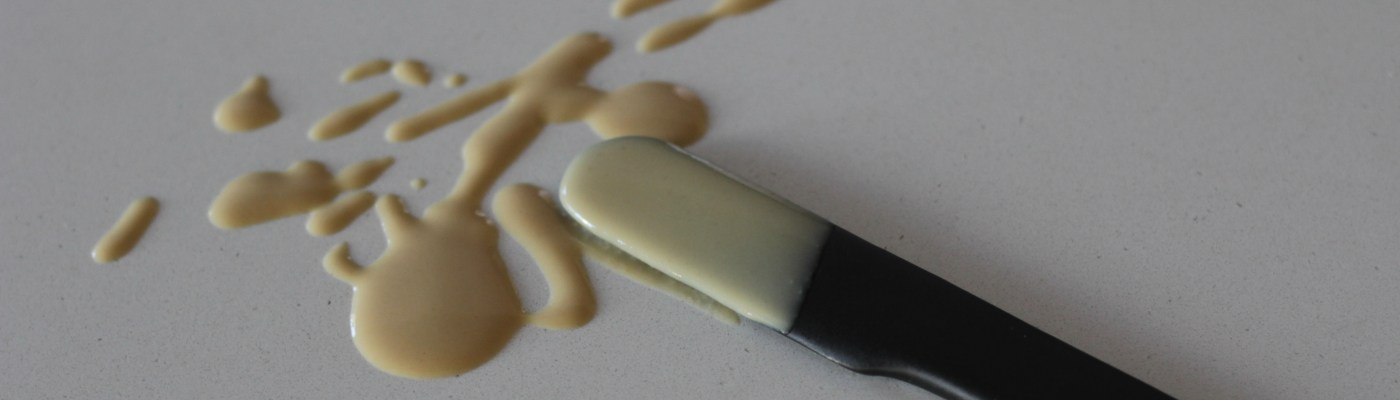
Oh my word. I did not know tahini could taste like this. It’s creamy and slightly sweetish, with a rich, nutty aftertaste rather than bitter. The texture is smooth and glossy with none of this oil-splitting-from-solids business. I’ve actually been eating it plain by the spoonful. It coats the whole inside of your palate with a sticky numminess.
It has now become abundantly clear to me why tahini is used in everything in the Middle East. When it tastes like this it can be used in anything. I’m led to believe the secret is in the grinding: the implements and the pace. For quality tahini, the sesame seeds are ground slowly using quality mills or old fashioned stone.
Armed with my jar of Lebanese tahini I immediately went on a tahini binge. I made Palestinian lamb kofte on a bed of roast potatoes (recipe from Zaitoun by Yasmin Khan), gluten free rose halva cookies (recipe from SBS Food), and salted dark chocolate tahini cookies (recipe my own, adapted from David Lebovitz).
Tahini is like peanut butter in many ways — it has a neutral palate that adds depth of flavour, earthiness, creamy stickiness, and richness. Yes it works in dressings and drizzles, as well as chocolate desserts. But it also pairs beautifully with tart jammy flavours. I have now read several flavour combinations described as a ‘Middle Eastern PBJ’, and I am on a mission now to determine which is true. I’m looking for my tahini #OTP, if you will. Joudie Kalla serves hers literally as a PBJ: tahini spread on toast and drizzled with pomegranate molasses. Sami Tamimi and Tara Wigley take theirs with rose strawberry jam and chunks of halva to create a modified Bakewell Tart. Izy Hossack swirls tahini with dates for a cinnamon scroll-style bakery treat. John Gregory-Smith is more elaborate still with an indulgent French toast garnished with carob molasses.
I’m keen to try all of these. But first, I think I’ll start with another Middle Eastern classic: sour cherry jam. Stay tuned.
 The Foodiarist
[…] previously written about how I’ve only recently realised that I’ve been eating sub-par tahini all these years, […]
LikeLike